
In this article, BrokerProReview walks you through everything you need to know about the Moving Average — from what it means and its main types, to how it's calculated and practical strategies you can apply right away.
What Is a Moving Average?
A Moving Average (MA) is a technical analysis tool that calculates the average price over a set period, helping traders see the underlying trend more clearly by smoothing out short-term price fluctuations.
For example, if you set a 20-day Moving Average (MA20), the indicator continuously calculates the average price of the last 20 days, forming a line that moves along with price. This lets traders identify whether the market is in an uptrend, downtrend, or moving sideways.
Why Does the Moving Average Matter?
- Identifies trend direction: Helps you see which way the market is heading
- Acts as dynamic support and resistance: MA lines often function as support or resistance levels in their own right
- Generates trading signals: When two MA lines cross (a "crossover"), it can signal an entry or exit point
- Easy to use: A beginner-friendly tool that works across virtually any asset class
Types of Moving Averages
There are several types of Moving Averages, but three are used most widely:
1. Simple Moving Average (SMA)
The SMA is the arithmetic mean of prices over a set period, calculated by adding up all the closing prices and dividing by the number of periods.
Formula: SMA = (P1 + P2 + ... + Pn) / n
The SMA's advantage is that it's smooth and less reactive to short-term noise, making it well suited to reading long-term trends. Its drawback is that it responds slowly to current price action.
2. Exponential Moving Average (EMA)
The EMA is a weighted moving average that gives more weight to recent prices than older ones, so it reacts to price changes faster than the SMA.
The EMA suits short-term traders (scalpers, day traders) who need signals that react quickly to the market — though the trade-off is a higher chance of false signals.
3. Weighted Moving Average (WMA)
The WMA is similar to the EMA but applies a linear weighting, giving the most recent price the highest weight and reducing it in a straight line for older prices. It suits analysis that needs high short-term precision.
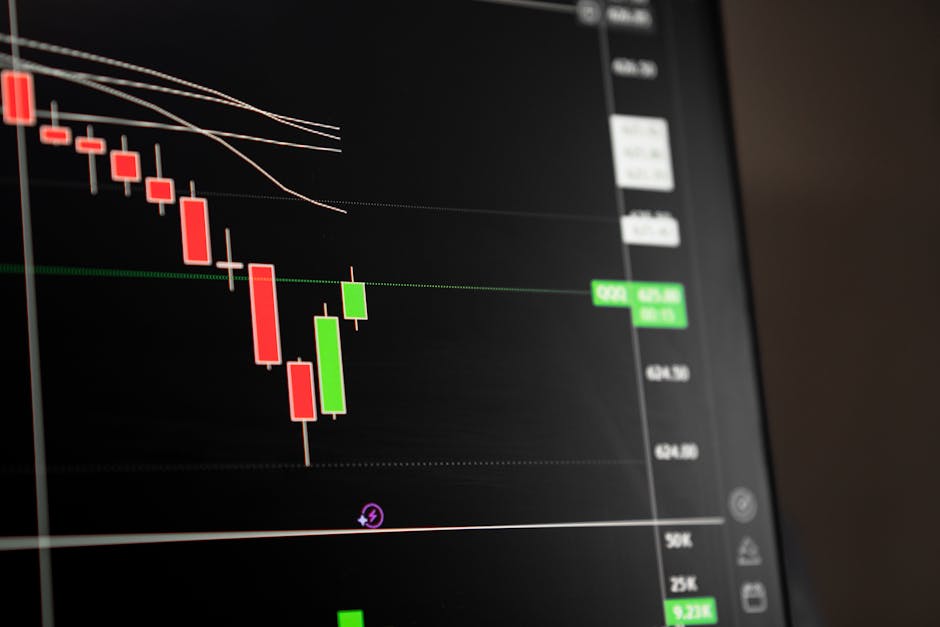
Common Moving Average Periods
The period (number of bars) you set for an MA depends on your trading style, but the most widely used values in Forex and stock trading are:
- MA 9, 20: For short-term trading (scalping, day trading)
- MA 50: For medium-term trading (swing trading)
- MA 100, 200: For long-term trading and assessing the primary trend
The 200-period MA in particular is widely treated as the line separating a bull market from a bear market, and institutional investors around the world track it closely.
Trading Strategies Using Moving Averages
1. Golden Cross and Death Cross
This is the best-known Moving Average strategy, based on two MA lines crossing:
- Golden Cross: When a shorter MA (e.g., MA50) crosses above a longer MA (e.g., MA200) → a bullish signal
- Death Cross: When a shorter MA crosses below a longer MA → a bearish signal
2. Moving Averages as Support and Resistance
In a market with a clear trend, price often bounces off key MA lines such as the MA50 or MA200. Traders can use these levels as entry points to buy on dips or sell on rallies.
3. Multiple Moving Average Strategy
This involves using several MAs at once (for example, MA20, MA50, and MA200) to confirm a trend. If all three lines are stacked in order from top to bottom and pointing upward, it suggests a strong uptrend.
Choosing a Broker Suited to Moving Average Trading
Moving Average strategies work best when you trade with a broker offering tight spreads, fast order execution, and a platform with full technical-analysis tools. Below is a comparison of a few well-known brokers reviewed on this site.
| Broker | EUR/USD Spread | Leverage | License | Min. Deposit |
|---|---|---|---|---|
| IUX | 0.2 pips | 1:3000 | FSCA, FSC, ASIC | $50 |
| Exness | 0.3 pips | 1:2000 | FCA, CySEC, FSA | $100 |
| XM | 0.6 pips | 1:1000 | ASIC, CySEC, IFSC | $30 |
| FBS | 0.7 pips | 1:3000 | CySEC, IFSC | $5 |
| HFM | 0.5 pips | 1:1000 | FCA, CySEC, DFSA | $5 |
Figures reference each broker's Standard account type at the time of writing and can change — always confirm current spreads and leverage directly with the broker before opening an account.
When comparing brokers for a Moving-Average-based approach, prioritise tight spreads and fast, requote-free execution — this matters most for scalping and day-trading styles, where even a fraction of a pip in cost can determine whether a signal is profitable. Regulatory protection also varies significantly by regulator and by the specific legal entity you sign up with: FCA-regulated entities fall under the UK's Financial Services Compensation Scheme, CySEC-regulated entities are covered by the Cyprus Investor Compensation Fund (capped per client), while ASIC does not operate a compensation scheme at all. Many brokers operate multiple entities under one brand, so always check which one you are actually registering with, since an offshore arm of a broker can carry materially weaker protections than its FCA- or ASIC-regulated counterpart.
Limitations of the Moving Average
The Moving Average is powerful, but traders should understand its limits:
- It's a lagging indicator: MAs are calculated from past prices, so they always respond slower than current price action
- It struggles in sideways markets: In a range-bound market with no clear trend, MAs generate frequent false signals
- It shouldn't be used alone: Combine it with other indicators such as RSI, MACD, or volume to confirm signals
- The right period depends on your style: There's no single "best" setting — test and adjust it to fit the asset and timeframe you trade
Conclusion: A Foundational Tool Every Trader Should Know
The Moving Average is a simple yet powerful technical analysis tool that helps traders read market trends, find entry and exit points, and build a systematic trading strategy. Whether you're a beginner or an experienced trader, understanding the MA in depth can meaningfully improve your trading.
That said, a good tool alone isn't enough — you also need a reliable broker offering tight spreads, fast execution, and solid regulatory standing so your strategy can perform as intended.


